


Cats are curious and inquisitive creatures. For them, your home is a whole world with countless interesting hidden corners. However, that world also has many hidden dangers. **'cat-proofing'** - or making your home safe - is not only a preventive measure, but also a way to show your love and responsibility, ensuring a truly **safe living environment for cats** and **peaceful for the whole family**.
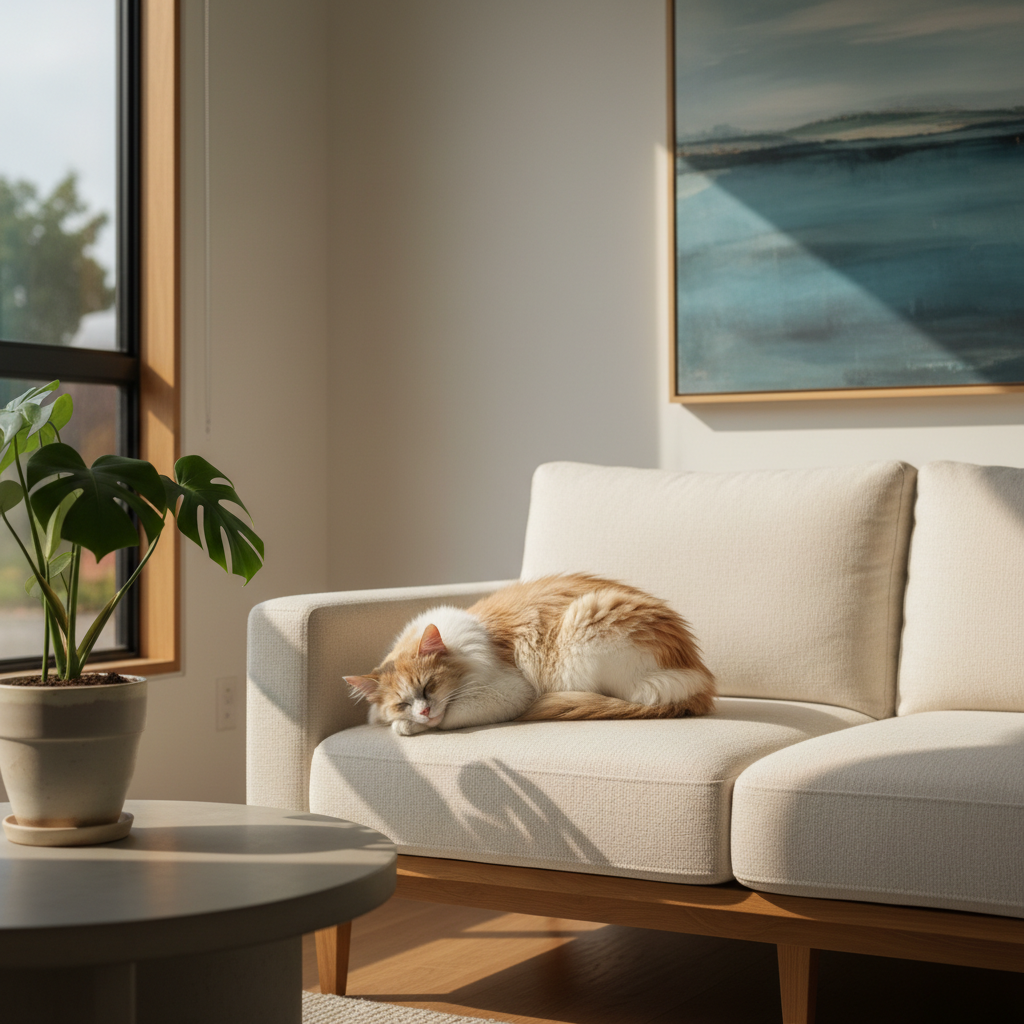
Here's a step-by-step guide to help you turn every corner of your home into a safe fortress for your majesty.
**1. Secure common areas (Living room & Bedroom)**
This is where cats spend most of their time, so let's start there:
* **Electrical Cords and Electronics**: Kittens and even active adult cats love to chew on electrical cords. Use cord sleeves, cord clips, or hide them behind furniture. Unplug unused appliances.
* **Windows and balconies**: Installing a **cat safety net** is a must, especially if you live in an apartment. The net helps prevent your cat from falling or running out while still ensuring open space.
* **Small items and fragile decorations**: Items such as rubber bands, paper clips, pins, jewelry, etc. can cause intestinal obstruction if swallowed by cats. Store them in a closed box or drawer. Fragile decorations should be placed up high or in places that are difficult for cats to reach.
* **Scented Candles and Fire Sources**: Flames and hot candle wax are extremely dangerous. Avoid burning candles unsupervised. Consider using a pet-safe essential oil diffuser instead.
**2. Kitchen - "Forbidden zone" that needs strict control**
The kitchen is filled with enticing aromas but is also home to some of the most dangerous:
* **Toxic Foods**: Always remember that many human foods are **poisonous to cats**, including chocolate, onions, garlic, grapes, alcohol, and products containing xylitol. Make sure they are stored properly.
* **Hot stoves and appliances**: Keep your cat away from hot stovetops. Use a stovetop cover or make it a habit to not let your cat jump on the stovetop.
* **Cleaning Chemicals**: These chemicals must be stored in a securely locked or latched cabinet. Clean up any spills immediately.
* **Trash Cans**: Cats may rummage through trash cans looking for leftover food and accidentally eat dangerous items. Use trash cans with tight-fitting lids.
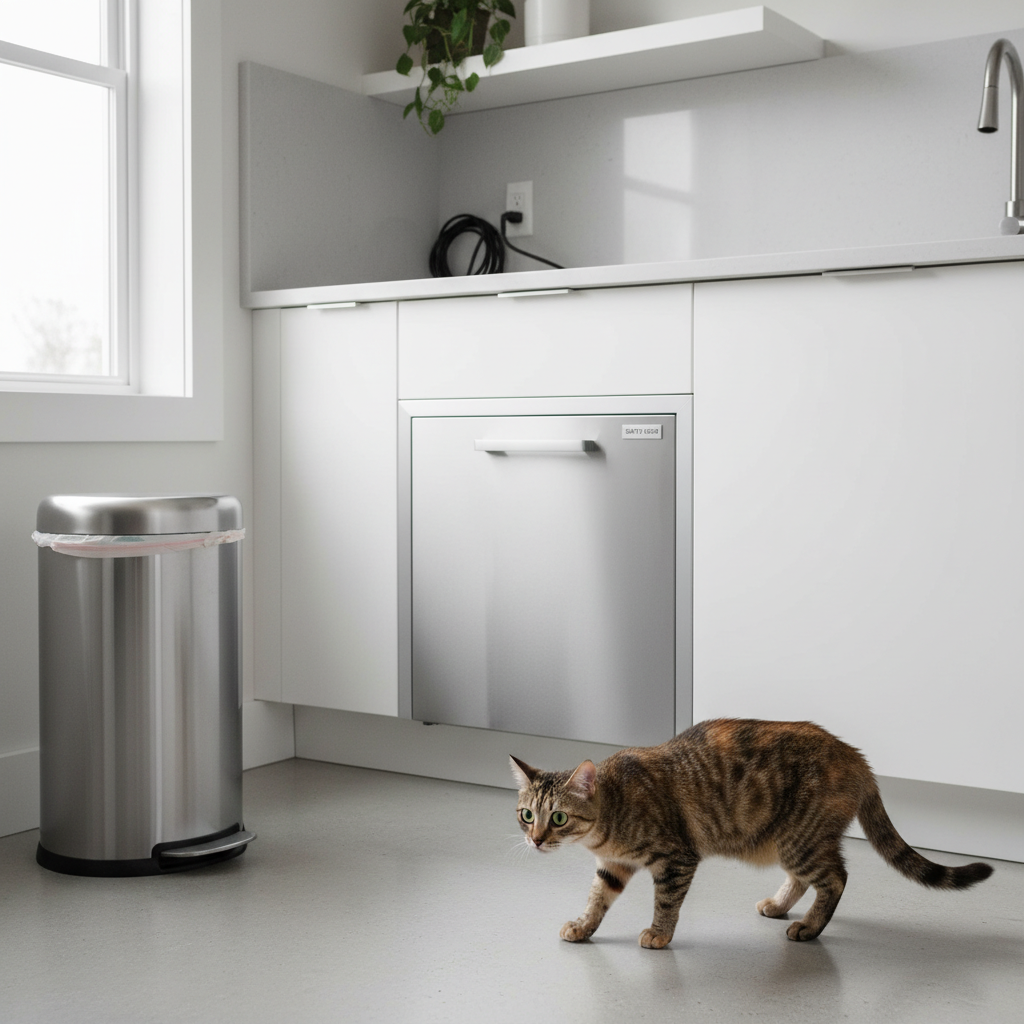
**3. Notes on Bathroom and Laundry Area**
This wet area also needs special attention:
* **Toilet Lid**: Always keep the toilet lid closed. Kittens can fall in and drown. Toilet water may also contain toxic cleaning chemicals.
* **Medicines and cosmetics**: Store all human medicines, cosmetics, toothpaste, etc. in a medicine cabinet with a tightly closed door. Many common medicines, such as paracetamol, are extremely toxic to cats.
* **Washing Machines and Dryers**: Cats love warm, private places to nap. Always check inside the washing machine or dryer before starting it.
**4. Choose cat-friendly plants**
Many people love plants but don't know that some popular houseplants are highly toxic to cats.
* **Poisonous plants to AVOID**: Lily (extremely poisonous, can cause acute kidney failure), Dieffenbachia, Pothos, Ivy, Cactus...
* **SAFE plants**: Catnip, Wheatgrass, Spider Plant, Calathea family plants, Areca Palm...

**5. Create an ideal and stimulating living space for your cat**
An important part of **cat-proofing** is redirecting your cat's curiosity into safe and rewarding activities.
* **Safe Toys**: Provide a variety of toys designed specifically for cats. Avoid toys with long strings, feathers, or small parts that can be swallowed when you are not there to supervise.
* **Scratching posts and cat trees**: These are essential items. They satisfy your cat's instinct to scratch and climb, helping them release energy and stay away from your furniture.
By taking the time to **home-safe**, you not only protect your cat from unfortunate accidents, but also create a harmonious living environment where both you and your cat feel relaxed and happy.


