


Why should you combine a Pate and Grain diet for cats?
Choosing between kibble (dry) and pâté (wet) is always a big question for cat owners. Each has its own advantages and disadvantages. Kibble is convenient, good for teeth and economical, while pâté provides high moisture and attractive flavor. Mixed-feeding , that is, combining both types, is emerging as the optimal solution, helping your pet cat get the benefits of both worlds while balancing the cost.
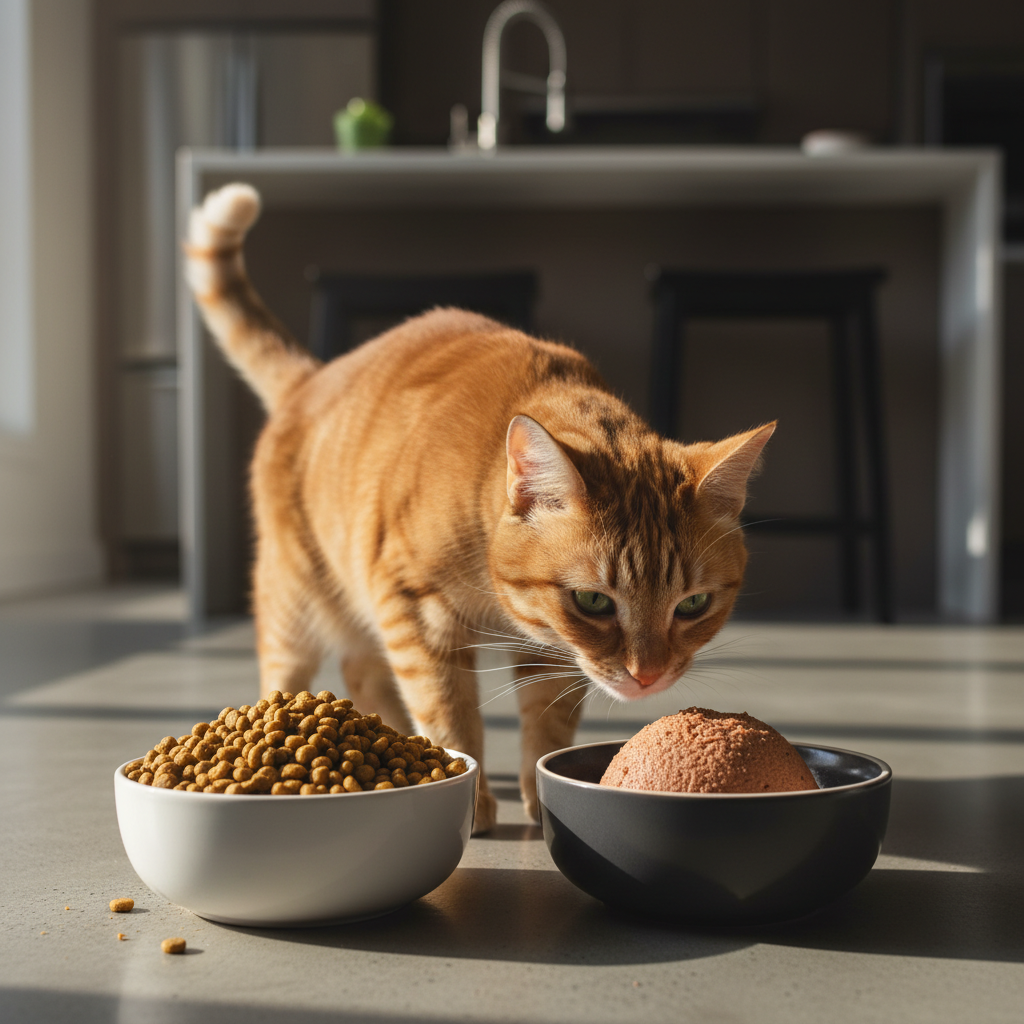
Outstanding benefits of mixed-feeding
Optimal Hydration: Cats tend to drink less water. Pate contains about 70-80% water, making it an excellent source of hydration, helping to support kidney function and reduce the risk of urinary tract diseases .
-
Balanced and comprehensive nutrition: The combination allows you to take advantage of the high, easily digestible protein content of the pate along with the fully supplemented vitamins, minerals and fiber found in high-quality grain food.
Improve taste, prevent picky eating: The variety of textures and flavors between pate and grain helps stimulate the cat's appetite, preventing anorexia or getting used to only one type of food.
Supports oral health: The crunchy texture of granulated food has a mechanical effect, helping to clean plaque on the tooth surface, thereby contributing to reducing the risk of gum disease.
-
Cost optimization: Compared to a 100% pate diet, using seeds as a base and pate as a supplementary meal will help you save significant costs while still ensuring your cat receives all the necessary nutrients.
Instructions for building a scientifically standard mixed diet of Pate & Seeds
Combining is not as simple as mixing two foods together. You need a calculated plan to ensure nutritional balance and not cause excess weight.
Step 1: Determine the total daily calories: This is the most important step. Based on age, weight, activity level and health status (neutered, pregnant...), determine the total calories your cat needs each day. This information is usually available on the product packaging or you can consult your veterinarian .
-
Step 2: Divide the ratio of Pate and Seeds: There is no golden ratio. You can start with a ratio of 70% calories from seeds and 30% calories from pate and then adjust. For example: If your cat needs 250 kcal/day, provide about 175 kcal from seeds and 75 kcal from pate.
Step 3: Schedule feeding appropriately: You can divide the meals into separate meals (e.g., pate for breakfast and dinner, seeds for free feeding during the day) or mix a small amount of pate with seeds in each meal to enhance the flavor. Avoid leaving the mixed pate out for more than 20-30 minutes to prevent bacteria from growing.
-
Step 4: Monitor and Adjust: Closely monitor your cat's weight, stool condition, coat shine, and energy level for several weeks. If your cat gains weight, reduce the total calorie intake. If anything unusual happens, consult a professional.
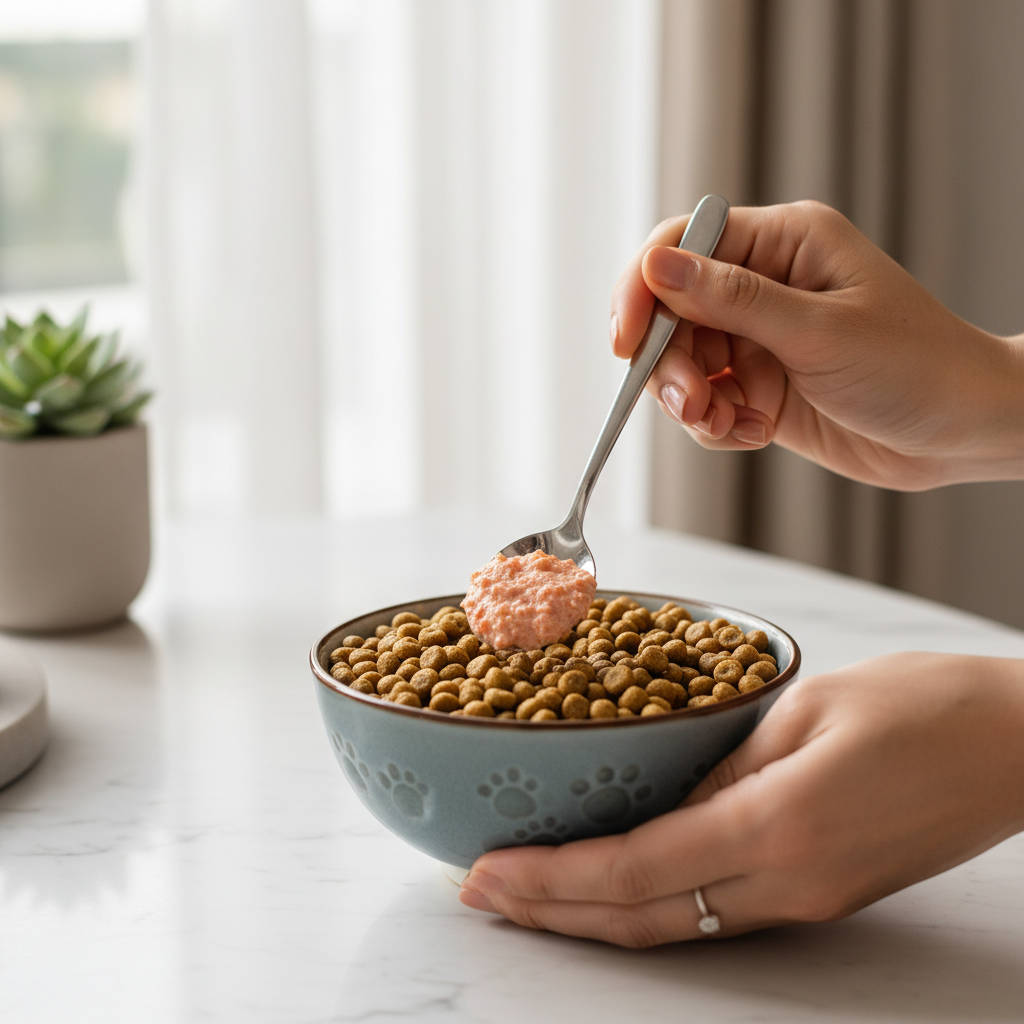
Mistakes to avoid when applying a mixed diet
Overfeeding: The most common mistake is simply adding pate to the existing grain ration without cutting back on the grain accordingly. This leads to excess calories and obesity .
Mixing and leaving food out for too long: Pate can easily spoil when exposed to air. Only mix enough food for one meal and clean the bowl after the cat has finished eating.
-
Sudden Transitions: Cats' digestive systems are very sensitive. When introducing a new food (whether pate or kibble), make the transition slowly over 7-10 days by gradually increasing the amount of new food and decreasing the amount of old food.
Choosing poor quality products: The benefits of a mixed diet only come into play when you choose high-quality pate and grain products with clear origins and transparent nutritional composition.
Conclude
Creating a mixed diet of Pate & Grain is a flexible, scientific and cost-effective way to feed your cat. By providing a variety of nutrients and textures, you not only help your cat eat more deliciously but also support comprehensive health from the digestive, urinary to dental systems. Always remember to observe your pet and consult your veterinarian to build the most suitable diet.


0 comments