


Why Is Dental Disease in Dogs Dangerous?
Many owners often ignore their dog's dental health, thinking that bad breath is "normal". However, this is an extremely dangerous misconception. Dental disease in dogs not only causes pain and discomfort for pets, but is also a silent 'killer' that can lead to serious systemic diseases, affecting the heart, liver, and kidneys, reducing their lifespan. Early recognition and proper prevention are the key to protecting your four-legged friend.

Signs of Dental Disease in Dogs
Pay attention to even the smallest changes in your pet. Early signs of periodontal disease in dogs include:
- Bad breath: This is the most common and easily recognizable sign.
- Yellow or brown plaque (tartar): Builds up on tooth surfaces, especially near the gum line.
- Swollen, red, or bleeding gums: A sign of gingivitis.
- Difficulty or pain when chewing: Dogs may refuse to eat, chew only on one side, or drop food.
- Drooling: Sometimes mixed with blood.
- Scratching mouth: An action that shows discomfort in the mouth.
- Behavioral changes: Dog becomes irritable or avoids you when you touch the mouth area.
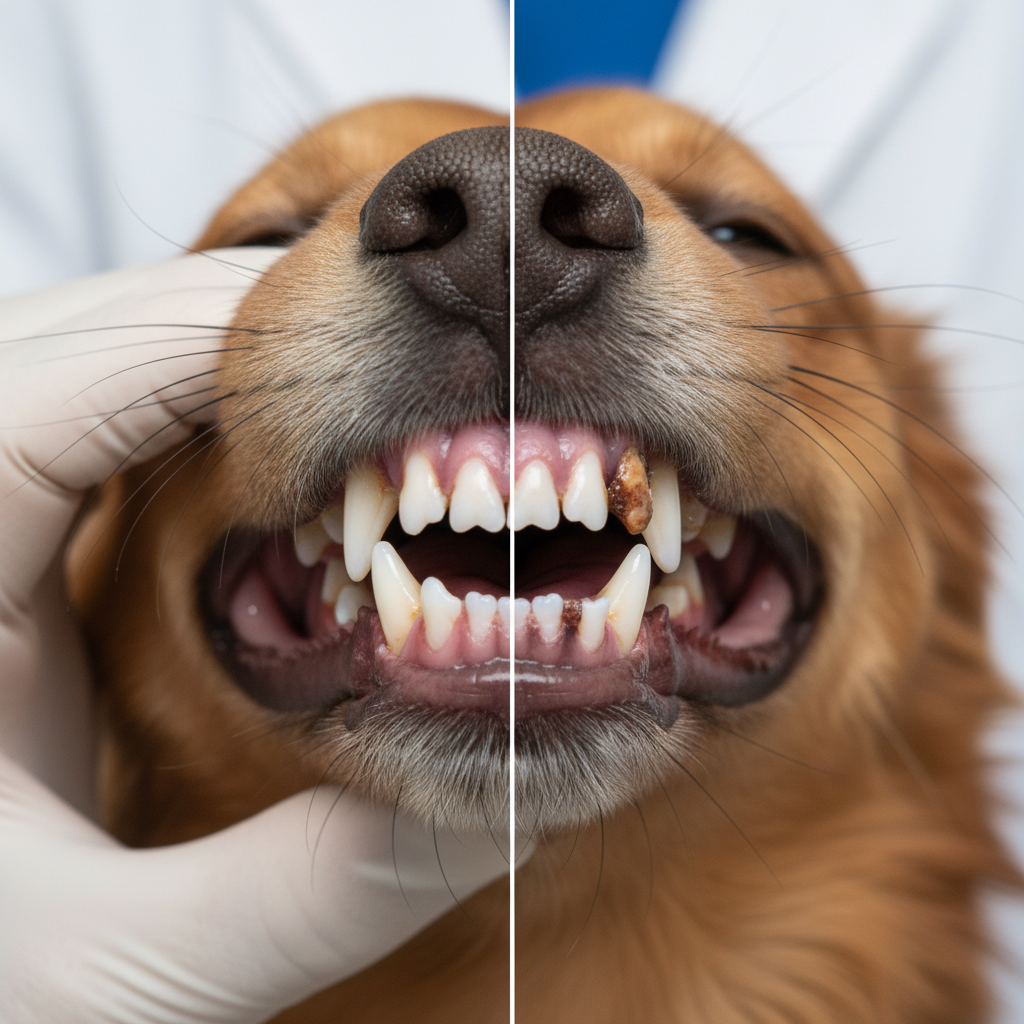
Common Dental Diseases and Unforeseeable Consequences
If left untreated, minor problems can develop into serious medical conditions:
- Plaque: A soft film of bacteria that forms on teeth.
- Tartar: When plaque hardens, it forms tartar, an ideal breeding ground for bacteria.
- Gingivitis: The early stage of periodontal disease, causing swelling and redness of the gums. This stage can be completely cured.
- Periodontitis: As gum disease progresses, it destroys the tissues that support teeth, leading to loosening, abscesses, and eventually tooth loss. Bacteria from here can enter the bloodstream, infecting vital organs such as the heart, liver, and kidneys.
How to Effectively Prevent Dental Disease in Dogs
Prevention is better than cure. Regular home dental care for your dog is extremely important.
1. Home care:
- Brush your teeth daily: This is the most effective method. Use a toothbrush and toothpaste specifically designed for dogs. NEVER use human toothpaste as it contains Fluoride and Xylitol which are toxic to dogs.
- Use dental chew toys and teethers: These products help remove plaque mechanically.
- Specialized dental health foods: Some kibbles are designed with a special size and texture that helps clean teeth as your dog chews.
- Drinking water additives: These products can help reduce bacteria and freshen breath.

2. Professional care:
- Regular dental checkups: Take your dog to the vet for a dental checkup at least once a year.
- Professional scaling: Your veterinarian will perform a thorough cleaning of the tartar above and below the gum line, and polish the teeth to prevent plaque from returning. This is the only way to completely remove tartar from your dog .
Conclusion
Dental health is an integral part of your dog's overall health. Don't ignore signs like bad breath in dogs . By establishing a regular dental care routine and taking them in for regular checkups, you're giving your companion a longer, healthier, happier life. Take action today to protect your pet's smile and health!


