


Reading the Label: The Confrontation Between Pate and Nuts
In the world of pet food, Pate (wet food) and Kibble (dry food) are two of the most popular options. However, reading and understanding the labels to assess their true quality can be a challenge. This article will take a closer look at the important aspects of packaging to help you become a smart consumer.
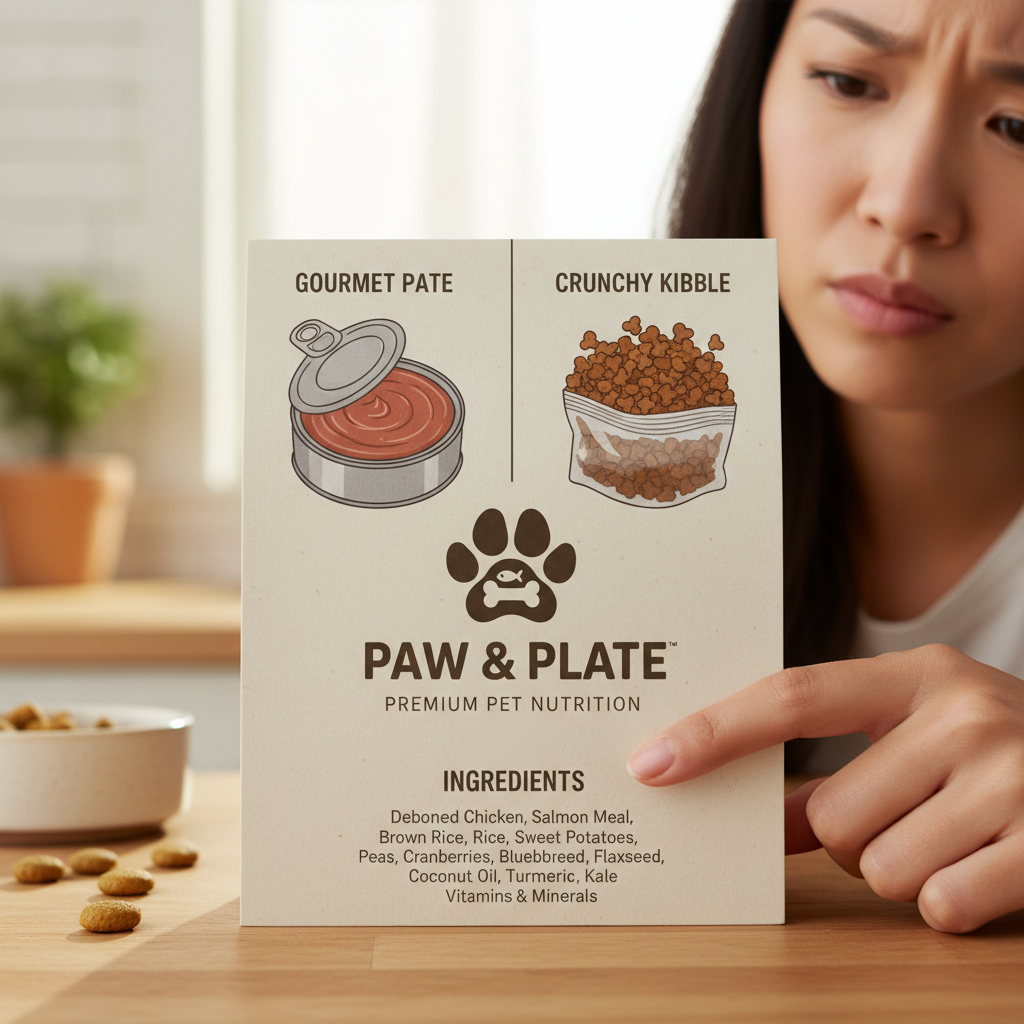
1. Ingredients List: The Truth Is in the Order
The golden rule when reading labels is that ingredients are listed in descending order by weight . This means the first ingredient has the highest percentage in the product.
- Pate (Wet Food): Usually has real animal protein sources (meat, fish) at the top of the list. High moisture (75-85%) is also a key ingredient, helping to hydrate your pet. Look for specific meats like “chicken” or “salmon” rather than generic terms like “meat by-products.”
- Grains (Dry Food): Usually has grain (corn, rice) or meat meal as the first ingredient. Due to the high temperature extrusion manufacturing process, fresh animal protein is difficult to maintain at the top. Some premium products will use “boneless chicken” but watch out for the “meal” ingredients that follow.
2. Additives: Necessary or unnecessary?
Additives are added to enhance nutrition, preserve food, or improve flavor. However, not all additives are good.
- Pâté (Wet food): Gelling agents such as carrageenan and guar gum are often used to create texture. Some of these can be controversial in terms of gut health if consumed long term. Due to their high moisture content, pâtés require less chemical preservatives than grains.
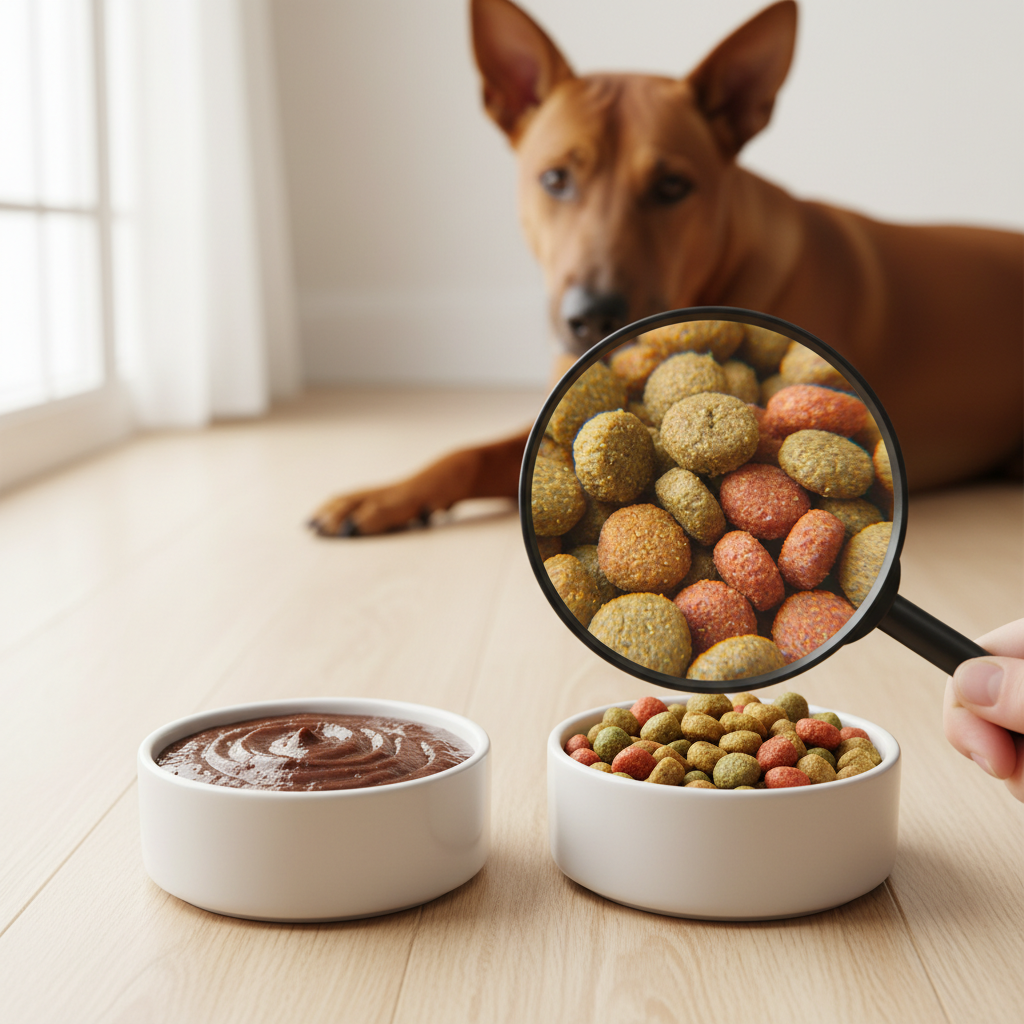
- Seeds (Dry Foods): Preservatives are required to prevent mold and fat rancidity. Prioritize products that use natural preservatives such as tocopherols (Vitamin E), rosemary extract instead of chemicals such as BHA, BHT, ethoxyquin. Seeds also often contain more artificial flavors and colors than pate.
3. Transparency: “Guaranteed Analysis” and Origin
Manufacturer transparency is an important indicator of product quality.
- Guaranteed Analysis: Provides minimum percentages of crude protein , crude fat, and maximum percentages of crude fiber and moisture . When comparing, it is necessary to convert to a “dry matter” basis by removing moisture for an accurate view, especially when comparing pate and grain.
- Ingredient origin: Reputable brands often clearly state the origin of their ingredients (e.g., “Norwegian salmon,” “free-range chicken”). Vague terms like “meat flavor” or “animal products” are a red flag.
- Pate usually wins in terms of protein quality: Due to less harsh processing, the protein in pate often retains a higher biological value. Conversely, grains tend to have a higher carbohydrate content due to the need for starch to form pellets.
Conclusion: Which choice for your pet?
Reading labels is not a battle of “Pate vs. Grain” but a journey to find the most suitable product. Pate is often superior in protein quality, high in moisture and low in carbohydrates . Meanwhile, Grain is more convenient, good for dental health (mechanical) and economical. The optimal choice may be a combination of both (mixed feeding). The most important thing is to rely on the ingredients, transparency and the reaction of the pet to make the final decision.


0 comments